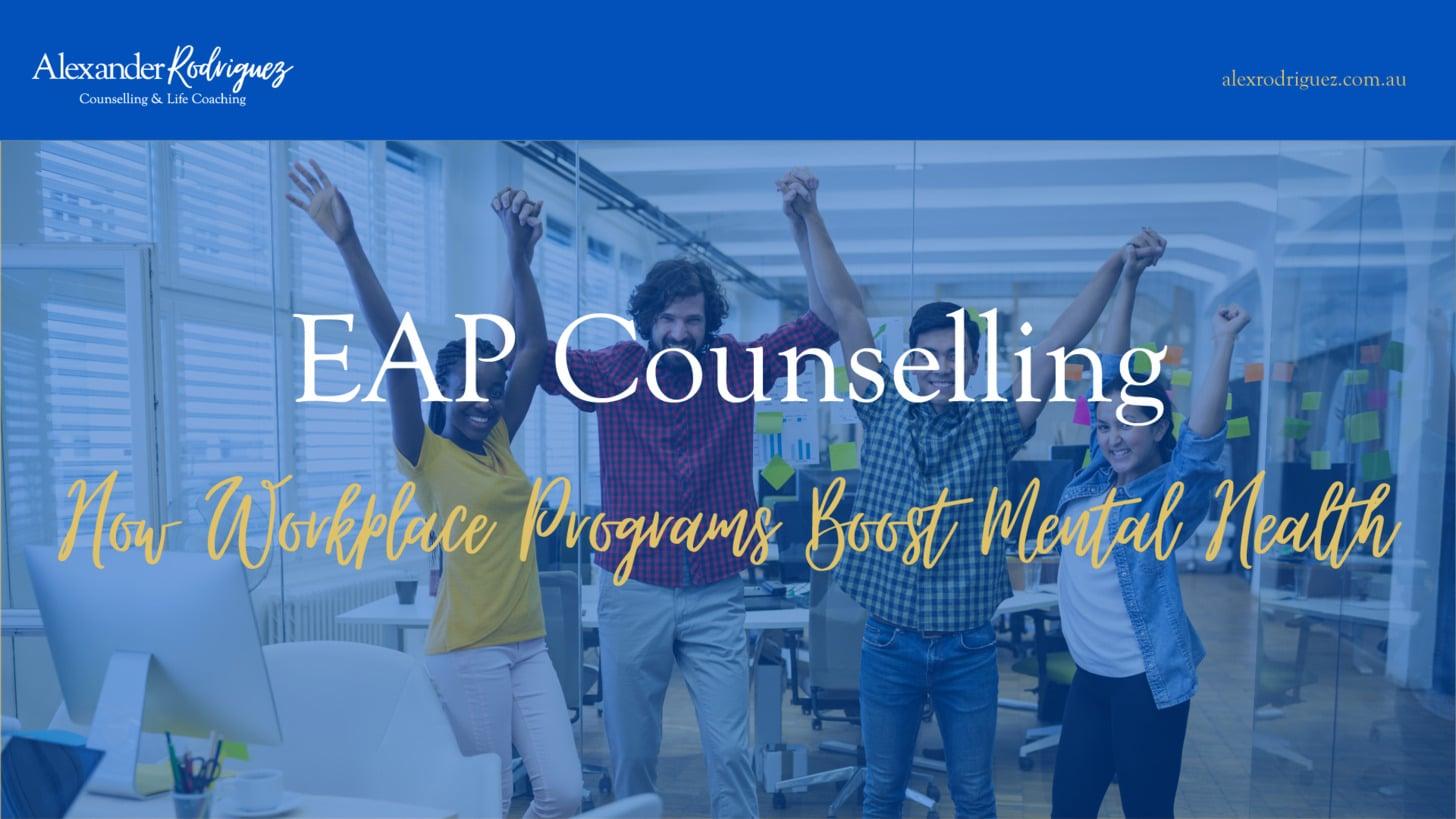
EAP Counselling: How Workplace Programs Boost Mental Health
[et_pb_section fb_built=”1″ admin_label=”section” _builder_version=”4.16″ global_colors_info=”{}”][et_pb_row admin_label=”row” _builder_version=”4.16″ background_size=”initial” background_position=”top_left” background_repeat=”repeat” custom_padding=”17px|||||” global_colors_info=”{}”][et_pb_column type=”4_4″ _builder_version=”4.16″ custom_padding=”|||” global_colors_info=”{}” custom_padding__hover=”|||”][et_pb_image src=”https://cms.alexrodriguez.com.au/wp-content/uploads/2025/08/image-7.jpeg” title_text=”image-7″ _builder_version=”4.27.4″ _module_preset=”default” global_colors_info=”{}”][/et_pb_image][et_pb_text admin_label=”Text” _builder_version=”4.16″ background_size=”initial” background_position=”top_left” background_repeat=”repeat” global_colors_info=”{}”]
Employee Assistance Programs (EAPs) are becoming a cornerstone of workplace wellbeing in Australia. In today’s fast-paced work environment, nearly 45% of Australians will experience a mental health condition in their lifetime, with workplace stress and burnout being leading contributors. By offering confidential counselling and support, EAPs create a caring environment where employees can manage personal and professional challenges. This not only helps individuals maintain their wellbeing but also enables organisations to foster resilience, productivity, and long-term success.
At Alex Rodriguez Counselling & Life Coaching, I have seen first-hand how Employee Assistance Programs (EAPs) help staff manage difficult times. I provide the tools, guidance, and confidential support employees need to look after their mental health and wellbeing. By working with organisations, I help create caring workplaces where staff feel supported. This leads to stronger resilience, better morale, and higher productivity.
Key Takeaways
- Mental wellbeing is crucial in the workplace.
- EAPs provide support for employees during challenging times.
- Career counselling is an essential component of EAPs.
- Organisations can boost employee wellbeing through EAPs.
- A supportive work environment enhances productivity.
Understanding EAP Counselling and Workplace Mental Health
Mental health support is key in today’s fast-paced work world. Employee Assistance Programs (EAPs) play a big role in keeping workplaces healthy.
What EAP Counselling Means for Employees
EAP counselling provides confidential support services that help employees manage personal and workplace challenges. These programs can include counselling sessions, coaching, and referrals to specialist resources, making it easier for staff to access the right help at the right time. By investing in EAP counselling, employers show a clear commitment to improving staff mental wellbeing, which in turn boosts morale, productivity, and workplace culture.
Why Workplace Mental Health Is More Important Than Ever (Australia 2025)
In Australia, workplace mental health has become a critical priority. Nearly 45% of Australians will experience a mental health condition in their lifetime, with stress, anxiety, and depression among the most common concerns. These issues directly affect both employee wellbeing and organisational productivity. In 2025, employers are increasingly recognising the need for proactive mental health support in the workplace. Addressing these challenges early not only improves the lives of employees but also creates healthier, more productive work environments.
The Purpose of This Guide – Benefits for Employees and Employers
This guide explains EAP counselling and its benefits for everyone. It shows how EAPs can improve mental health outcomes and support a better work environment. For employees, it means confidential access to professional support.
For employers, it leads to improved productivity and less absenteeism.
Employee Assistance Programs (EAP): What You Need to Know
Employee Assistance Programs (EAPs) are designed to support staff when personal or work challenges affect their wellbeing. These confidential programs provide counselling, guidance, and resources that help employees manage stress, mental health concerns, and everyday difficulties. By offering a structured and supportive framework, EAPs promote resilience and create healthier, more productive workplaces.
Definition of Employee Assistance Programs (EAP)
Employee Assistance Programs (EAPs) are confidential, employer-funded services designed to support employees and their families. They typically provide short-term counselling, financial guidance, legal advice, and referral pathways to specialist support when needed. According to the Australian HR Institute, EAPs are considered an essential part of promoting workplace mental health and sustaining employee wellbeing.
“Employee Assistance Programs are a cornerstone of modern workplace wellbeing initiatives, providing employees with the support they need to thrive.”
EAPs aim to offer accessible and confidential support. They help employees tackle issues before they affect their work. EAPs meet various employee needs, fostering a caring work environment.
How Counselling Is Delivered
EAP counselling is available in different ways. This includes:
- In-person counselling: Sessions with a professional counsellor.
- Online counselling: Virtual sessions on secure platforms.
- Phone counselling: Immediate help over the phone.
This variety ensures employees can get help in a way that suits them. It makes support flexible and accessible.
Who Can Access EAP Services
EAP services are available to all employees and, in many cases, their immediate families. This broader access ensures that support extends beyond the individual, recognising the important role family wellbeing plays in overall mental health. By making services inclusive, organisations demonstrate a genuine commitment to caring for their people. Clear communication about who can use EAP services helps build a supportive workplace culture and encourages employees to seek help when they need it.
Why EAP Counselling Matters in 2025
In 2025, EAP counselling is more important than ever as workplace stress and mental health challenges continue to rise. With increasing rates of anxiety, depression, and burnout among employees, modern workplaces require strong support systems that go beyond traditional HR practices. EAP counselling provides timely, confidential assistance that helps staff manage personal and professional pressures, while also building healthier, more productive organisations.
Rising Workplace Stress, Burnout, and Anxiety
Workplace stress, burnout, and anxiety are increasing. EAP counselling is a vital support for employees. It gives them confidential access to professional help.
The demands of modern work can harm mental health. Long hours, tight deadlines, and heavy workloads are common. EAP counselling services help employers create a healthier work place.
Post-COVID Shift Towards Mental Health Awareness
Since the COVID-19 pandemic, conversations about mental health in the workplace have become far more visible. At Alex Rodriguez Counselling & Life Coaching, I have seen how this shift has encouraged employees to speak up about stress, anxiety, and burnout rather than keeping struggles hidden.
Employee Assistance Program (EAP) counselling is central to this change. By offering confidential support, it gives staff the tools to care for their mental wellbeing and helps employers build a culture where people feel safe, valued, and understood. This proactive approach also reduces stigma, making it easier for employees to reach out when they need help.
Legal and Ethical Obligations for Australian Employers
Australian employers have a legal and ethical responsibility to provide a safe and healthy workplace. This responsibility extends to supporting mental health, not just physical safety. EAP counselling plays a key role in meeting this duty of care by giving employees access to professional, confidential support when they need it.
By investing in EAP programs, organisations demonstrate genuine care for their staff’s wellbeing. This proactive approach helps prevent mental health issues from escalating, reduces risks in the workplace, and lowers costs associated with absenteeism, turnover, and potential compliance breaches.
Common Issues Addressed in EAP Counselling
As a counsellor, I have seen how EAP counselling provides vital support for employees facing workplace and personal challenges. These confidential support services help staff manage their mental wellbeing and build resilience. Through EAP counselling, employees can access guidance for issues such as:
- Stress and burnout
- Anxiety and depression
- Workplace conflict and communication problems
- Work-life balance struggles
- Substance misuse or dependency
- Financial and legal concerns
By addressing these challenges early, EAP counselling reduces the impact on productivity while improving employee satisfaction and wellbeing.
Stress and Burnout Management
Stress and burnout are big problems at work. They affect how well employees do their jobs and how happy they are. EAP counselling teaches ways to deal with stress, like:
- Identifying stress triggers
- Developing coping mechanisms
- Improving time management skills
By tackling stress and burnout, EAPs help employees balance their work and personal lives better. This improves their overall wellbeing.
Anxiety and Depression Support
EAP counselling offers a safe place for employees to talk about anxiety and depression. They get help with:
- Recognizing symptoms of anxiety and depression
- Access to professional counsellors for guidance and therapy
- Strategies for managing symptoms and improving mental health
Early help from EAP counselling can stop mental health problems from getting worse. It ensures employees get the support they need.
Conflict Resolution in the Workplace
Workplace conflicts can really hurt morale and productivity. EAP counselling helps solve these problems with:
- Mediation services
- Conflict resolution strategies
- Improved communication techniques
By fixing conflicts, EAPs make the workplace better for everyone.
Work-Life Balance Coaching
Having a good work-life balance is key for employee wellbeing. EAP counselling teaches how to:
- Set boundaries
- Prioritize tasks
- Manage work demands
Good work-life balance leads to better mental health, job satisfaction, and overall wellbeing for employees.
| Issue | EAP Counselling Support | Benefits |
|---|---|---|
| Stress and Burnout | Stress management techniques, coping mechanisms | Improved wellbeing, productivity |
| Anxiety and Depression | Professional counselling, symptom management | Early intervention, improved mental health |
| Conflict Resolution | Mediation services, conflict resolution strategies | Harmonious work environment, improved morale |
| Work-Life Balance | Coaching on boundaries, prioritization | Better mental health, job satisfaction |
“EAP counselling has been instrumental in supporting my mental health during challenging times at work. The confidentiality and professionalism of the counsellors have made a significant difference.”
EAP counselling tackles many workplace issues, helping employees manage their mental health. It’s a key part of promoting wellbeing at work.
Benefits of EAP Counselling for Employees
Employee Assistance Programs (EAPs) are a big help for workers facing today’s work challenges. They give employees a chance to talk to professionals about their mental health. This helps them manage their wellbeing.
Confidential and Stigma-Free Access to Help
EAP counselling is private and free from stigma. It lets employees get help without worrying about being judged or affecting their job. This privacy is key to creating a safe place for them to talk about their mental health.
Early Intervention Prevents Escalation
Getting help early through EAP counselling can stop mental health problems from getting worse. It helps employees deal with stress, anxiety, or depression quickly. This keeps their wellbeing and work performance strong.
Access to Professional Counsellors
EAPs connect employees with skilled counsellors for many mental health issues. These experts give advice, support, and ways to handle stress and other challenges. They help employees deal with tough times well.
Better Wellbeing and Work Performance
EAP counselling helps employees’ mental health, leading to better wellbeing and work. When they feel supported, they’re more likely to be engaged, productive, and happy at work.
In summary, EAP counselling is a big plus for employees. It offers private access to professional help, which is crucial for their mental health and wellbeing.
Benefits of EAP Counselling for Employers
Supporting mental health through EAP counselling brings big benefits to organizations. It saves money and boosts productivity. As mental wellbeing in the workplace becomes more important, EAPs are key to a healthy work environment.
Reduced Absenteeism and Presenteeism
EAP counselling helps cut down on time off and work performance issues. It gives employees the support they need for mental health. This means they can tackle problems early, avoiding long absences.
A study by the Australian Bureau of Statistics shows mental health is a big reason for missing work. Employees take about 6.3 days off each year for mental health. With EAP counselling, employers can lower this number, saving money and boosting productivity.

Improved Staff Morale and Retention
EAP counselling shows employers care about their employees’ wellbeing. This makes employees feel valued and more likely to stay engaged. It leads to happier workers and less turnover.
A survey by the Australian Human Resources Institute found 75% of employees feel more valued with EAP services. This boosts morale and helps keep staff, saving on recruitment and training costs.
Meeting Duty of Care and Compliance Requirements
Employers must provide a safe and healthy work environment. This includes supporting mental wellbeing. EAP counselling helps meet this duty by offering professional help and promoting mental health awareness.
By investing in EAP counselling, employers also meet legal requirements. This reduces the risk of accidents and injuries, and avoids costly lawsuits.
ROI: Cost Savings by Supporting Mental Health Early
Employee Assistance Programs (EAPs) deliver strong financial returns by addressing mental health issues early. A peer-reviewed study analyzing over 166,000 cases found an average ROI of $5.39 for every $1 invested, driven by reduced healthcare costs, increased productivity, and organisational support services.
Further evidence from cost-benefit research shows ROI ranging from $1.49 to $13 per dollar spent, depending on factors such as employee uptake and program design.
| EAP Investment | ROI Range | Source |
|---|---|---|
| $1 | $5.39 | Peer-reviewed study |
| $1 | $1.49 – $13 | Cost-benefit research |
By offering EAP counselling, employers can help employees deal with mental health issues early. This reduces the risk of costly problems later on. It leads to big savings and boosts productivity, making EAP counselling a smart investment.
“EAPs are a critical component of a comprehensive mental health strategy in the workplace. By providing employees with access to confidential counselling services, employers can promote a culture of mental health awareness and support, leading to improved productivity and cost savings.”
How to Access EAP Counselling
If you are considering EAP counselling, the first step is knowing how to get started. At Alex Rodriguez Counselling & Life Coaching, I work with organisations to make sure their employees have easy and confidential access to support. Most Employee Assistance Programs (EAPs) allow staff and their families to book sessions directly, either through a hotline, online appointments, or by speaking with HR. My goal is to make the process simple, so you can focus on your mental health and wellbeing without added stress.
Typical Process – Hotlines, HR Referral, Direct Booking
Getting EAP counselling is simple, and I make sure the process is as stress-free as possible. You can choose the option that works best for you:
- Hotline or Helpline: Call a 24/7 support line to talk with a counsellor or arrange a session.
- HR Referral: Your HR team can provide my contact details or booking link so you can connect with me directly.
- Direct Booking: You can alsobook a session online or by calling me to set up an appointment.
Whichever way you choose, I ensure that your experience is confidential, supportive, and focused on your mental wellbeing.
Number of Free Sessions Usually Included
EAPs usually offer 3 to 6 free sessions per issue. This means you can get professional help without extra cost.
| EAP Provider | Number of Free Sessions |
|---|---|
| Provider A | 4 sessions |
| Provider B | 6 sessions |
| Provider C | 3 sessions |
Confidentiality and Privacy Protections
EAP counselling keeps your info private. EAPs follow strict laws to protect your confidentiality and privacy.
“Confidentiality is key to trust. It lets people share their worries safely, without fear of being judged.” –
What Happens After – Ongoing Therapy Options
Need more help after the free sessions? EAPs can help you find ongoing therapy. They might:
- Refer you to a private therapist
- Help you continue with the EAP or other providers
- Guide you to more mental health resources
Your EAP counsellor will help you find the best support for your ongoing needs.
Choosing the Right EAP Provider (For Businesses)
At Alex Rodriguez Counselling & Life Coaching, I understand how important it is for organisations to choose the right EAP provider. Not every program offers the same level of care, which is why I focus on delivering more than just counselling. I provide a wide range of services, maintain strong professional standards, and ensure that support is simple and accessible for your staff. By partnering with me, you can be confident your team will receive the care they need to improve their wellbeing and workplace performance.
Accreditation and Professional Standards
First, check if the EAP provider is accredited and follows professional standards. In Australia, look for accreditation from bodies like the Australian Counselling Association (ACA). Accreditation means the counsellors are qualified and follow a code of ethics, giving you confidence in their service.
Range of Services Offered Beyond Counselling
EAP services include more than just counselling. Look for providers that offer work-life balance coaching, stress management workshops, and critical incident response. Choose a provider that meets your employees’ specific needs.
Availability: 24/7 and Multilingual Support
In today’s world, 24/7 EAP access is crucial. Choose a provider that offers 24/7 support so your employees can get help anytime. Also, if your team is diverse, pick a provider with multilingual support for everyone.
Reporting, Feedback, and Measurable Outcomes
It’s vital to have a provider that offers detailed reporting and feedback. Look for regular updates, employee feedback, and clear outcomes. This shows how effective the EAP is and where it can improve.
| Criteria | What to Look For | Benefits |
|---|---|---|
| Accreditation | Recognition by bodies like ACA | Ensures quality and ethical standards |
| Range of Services | Beyond counselling: coaching, workshops, etc. | Comprehensive support for various employee needs |
| Availability | 24/7 support, multilingual options | Accessible help at any time for all employees |
| Reporting & Feedback | Regular updates, employee feedback, measurable outcomes | Demonstrates EAP effectiveness and identifies improvement areas |
Real-World Impact: EAP Counselling Case Study
Looking at a real case study shows how EAP counselling works. Employee Assistance Programs (EAPs) play a big role in helping workplace mental health. Their success is clear in real-life examples.
At Alex Rodriguez Counselling & Life Coaching, I worked with an employee (let’s call him James) who was struggling with high stress and anxiety due to workload pressures. Through his company’s Employee Assistance Program (EAP), he accessed a series of confidential counselling sessions with me at no cost to him.
Together, we identified strategies to manage his stress, improve his work-life balance, and rebuild his confidence. Within a few weeks, James reported sleeping better, feeling more focused, and communicating more effectively with his team.
From the employer’s perspective, the program reduced his absenteeism and prevented further burnout, which helped the business maintain productivity. This case shows how EAP counselling can create a win–win outcome, supporting both employee wellbeing and organisational performance.

Anonymous Employee Outcome
An employee was dealing with anxiety and burnout. EAP counselling gave them confidential help. They learned how to handle stress better.
This helped them feel better at work and balance their life better.
“I was unsure at first, but EAP counselling changed my life. The counsellor was kind and gave me useful tips. I felt supported and could handle my anxiety.” – Anonymous Employee Testimonial
Organisational Benefit
EAP counselling also helps the workplace. It helps employees when they’re struggling. This can make employees happier and less absent.
In one case, a company saw 25% less absenteeism with EAP. This boosted productivity and made the workplace better.
- Improved employee wellbeing
- Reduced absenteeism
- Enhanced staff morale
- Better workplace culture
As workplaces deal with mental health, EAP counselling is key. It gives employees professional help. This makes the workplace kinder and more productive.
Is EAP Counselling Right for You?
EAP counselling can change lives, but how do you know if it’s for you? It’s key to look at signs that show you might need it. Also, think about why companies invest in these programs.
Signs an Employee May Benefit from EAP
If you’re feeling stressed, anxious, or burnt out, EAP counselling could help. Other signs include:
- Having trouble balancing work and life
- Finding it hard to solve work conflicts
- Seeing your wellbeing or job performance drop
Spotting these signs early lets you seek help through EAP counselling.
Why Businesses Should Invest in EAP Programs
Offering EAP programs is more than kindness; it’s a smart business move. It can bring big benefits. Companies gain by:
- Lowering absences and work performance issues
- Boosting staff happiness and keeping them longer
- Increasing productivity and job happiness
This way, businesses support their employees’ mental health. They also create a better work place.
Knowing the good of EAP counselling and spotting when you or your team needs it helps make smart choices. It’s about using these valuable tools wisely.
Final Thoughts & Next Steps
In today’s fast-paced work environment, EAP counselling is key for workplace wellbeing and employee mental health. It’s important to see its benefits for both employees and employers.
Key Takeaways on EAP and Workplace Wellbeing
EAP counselling is a vital part of workplace wellbeing strategies. It helps not just individual employees but also the whole work environment.
- Confidential Support: EAP services offer a safe, confidential space for employees to tackle their challenges.
- Early Intervention: EAP counselling can stop mental health issues from getting worse by acting early.
- Improved Productivity: Supported employees tend to be more productive and engaged at work.
Why Employees Should Use EAP When Offered
Using EAP counselling services is a proactive step for employees to keep their mental wellbeing in check. It’s a valuable resource for dealing with work life stresses.
| Benefits for Employees | Description |
|---|---|
| Access to Professional Counsellors | Employees get professional counselling services that fit their needs. |
| Confidentiality | EAP services are confidential, offering a safe space for employees to share their concerns. |
| Work-Life Balance | Counselling helps employees find a better balance between work and personal life. |
Why Employers Should View EAP as an Investment
From my perspective at Alex Rodriguez Counselling & Life Coaching, I have seen how valuable it is for organisations to invest in EAP counselling. When companies provide confidential support for their staff, they build a healthier, more engaged, and more productive workforce. It is about creating a workplace culture that truly values employee wellbeing.
By embracing EAP counselling, employers send a clear message that mental health matters.
FAQ
What is EAP counselling, and how does it work?
EAP counselling is a service for employees to support their mental health. It offers confidential access to professional counsellors. They help with stress, anxiety, and balancing work and life.
Who can access EAP counselling services?
EAP services are for employees and their families. Who can use it varies by EAP provider and employer policies.
How is EAP counselling delivered?
EAP counselling is offered in different ways. You can have in-person, online, or phone sessions. The choice depends on the provider and your preference.
Is EAP counselling confidential?
Yes, EAP counselling is confidential. Counsellors follow strict confidentiality rules. They won’t share your information without your consent.
How many free sessions are usually included in an EAP program?
Free sessions vary by EAP provider and employer agreement. Usually, you get 3 to 6 sessions per issue.
What happens after the free EAP sessions are used up?
After free sessions, you might pay for more counselling or get referrals. Some employers offer extra support or extended services.
How do I choose the right EAP provider for my business?
Look for accreditation, a wide range of services, and 24/7 support. Also, check if they can report outcomes and give feedback.
What are the benefits of EAP counselling for employees?
EAP counselling offers confidential support and early help for mental health issues. It improves wellbeing and work performance.
What are the benefits of EAP counselling for employers?
Employers see less absenteeism and better morale and retention. It also saves costs by supporting employees’ mental health early on.
How can I tell if an employee may benefit from EAP counselling?
Look for changes in behaviour or performance, more absences, or reports of stress or anxiety.
Why should businesses invest in EAP programs?
EAP programs support employee mental health. This leads to better productivity, less turnover, and a positive impact on profits.
[/et_pb_text][/et_pb_column][/et_pb_row][et_pb_row admin_label=”row” _builder_version=”4.16″ background_size=”initial” background_position=”top_left” background_repeat=”repeat” custom_padding=”17px|||||” global_colors_info=”{}”][et_pb_column type=”4_4″ _builder_version=”4.16″ custom_padding=”|||” global_colors_info=”{}” custom_padding__hover=”|||”][et_pb_text admin_label=”Text” _builder_version=”4.16″ background_size=”initial” background_position=”top_left” background_repeat=”repeat” global_colors_info=”{}”][/et_pb_text][/et_pb_column][/et_pb_row][/et_pb_section][et_pb_section fb_built=”1″ admin_label=”section” _builder_version=”4.16″ global_colors_info=”{}”][et_pb_row _builder_version=”4.27.4″ _module_preset=”default” global_colors_info=”{}”][et_pb_column type=”4_4″ _builder_version=”4.27.4″ _module_preset=”default” global_colors_info=”{}”][/et_pb_column][/et_pb_row][/et_pb_section]